Cold chain transportation of chicken legs is a closed-loop process, with each link closely connected. Any omission in any link may lead to a decrease in chicken leg quality and an increase in losses. The core process can be divided into four key links:
Pre processing and rapid freezing stage: After the chicken legs are slaughtered and divided, they are first pre cooled and acidified to remove internal heat and excess moisture from the meat, and then enter the rapid freezing stage. At present, the mainstream industry adopts cold air quick freezing or immersion quick freezing technology, among which immersion quick freezing can freeze chicken legs within 3-15 minutes, quickly reducing the center temperature to below -18 ℃, forming micro sized ice crystals, minimizing cell damage, preserving the moisture, nutrition and taste of chicken legs, and controlling the juice loss rate below 5% after thawing.
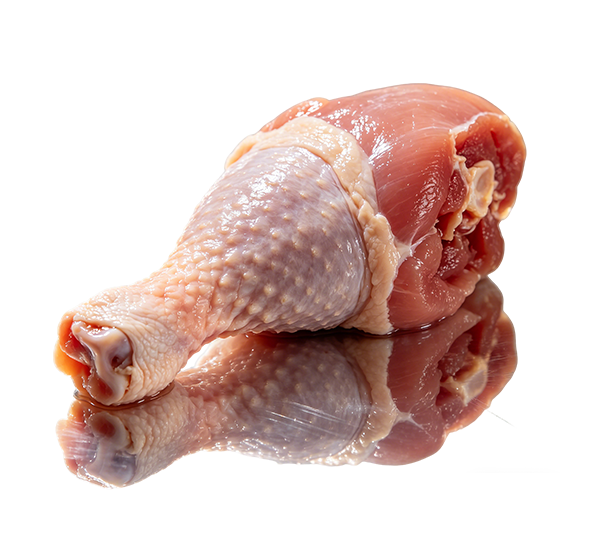
Packaging process: After rapid freezing, chicken legs need to be packaged in a standardized manner. Food grade PE bags are commonly used for vacuum packaging to isolate oxygen and inhibit microbial growth. Polyurethane insulation boxes can be added to the outer layer to prevent temperature fluctuations and packaging damage during transportation. The packaging should clearly indicate the product name, production date, shelf life, storage temperature, and other information, in accordance with packaging labeling standards such as GB/T 191 and GB/T 6388, to avoid confusion or missing information during transportation.
Transportation process: Use refrigerated trucks or containers that meet the requirements of GB/T 28640. The carriages must have good sealing and insulation performance, and be equipped with at least 2 temperature monitoring points (1 at the front and 1 at the rear) to monitor the carriage temperature in real time. Throughout the transportation process, the temperature of the carriage must be kept below -18 ℃, with temperature fluctuations not exceeding ± 2 ℃, and relative humidity controlled between 85% and 90%. At the same time, severe vibrations should be avoided to reduce mechanical damage to the chicken legs.
Loading and unloading and transfer process: Loading and unloading operations need to be fast and efficient, with the entire process controlled within 15 minutes, reducing the exposure time of chicken legs in a normal temperature environment; The goods should be stacked neatly, with a distance of no less than 10cm from the walls and top of the carriage to ensure air conditioning circulation, following the principle of "first in, first out". The transfer process needs to be smoothly connected, and the temperature of the transfer warehouse should be maintained below -18 ℃. The transfer time should not exceed 30 minutes to avoid temperature fluctuations affecting the quality of chicken legs.