Based on relevant standards such as the "Control Regulations for Losses during Cold Chain Transportation of Frozen Poultry Meat", the control of losses during cold chain transportation of chicken legs needs to be integrated throughout the entire process, with core measures including:
Preparation and control before transportation: Before transportation, a comprehensive inspection of refrigeration equipment is required to ensure that refrigeration units, temperature recorders, door seals, and other components are working properly. The carriage should be clean, non-toxic, odorless, and free of chemical or pollutant residues; Pre cool the carriage to below -10 ℃ before loading, and wait for the temperature to stabilize before loading; Strictly inspect the chicken legs to ensure that the center temperature is ≤ -18 ℃, the surface is free of thick frost (thickness ≤ 3mm), there is no dryness or whitening, the packaging is intact without damage or air leakage, and unqualified goods are rejected.
Transportation process control: Maintain the cabin temperature below -18 ℃ throughout the entire process, control temperature fluctuations within ± 2 ℃, and keep relative humidity between 85% and 90%. If the humidity is below 80% or above 95%, promptly activate the humidifier or dehumidifier; Avoid prolonged parking. If you need to park, choose a shady place and activate the backup refrigeration equipment to drive smoothly and reduce severe vibrations; Drivers need to undergo professional training, master temperature control and emergency response skills, hold a health certificate, and receive regular hygiene training.
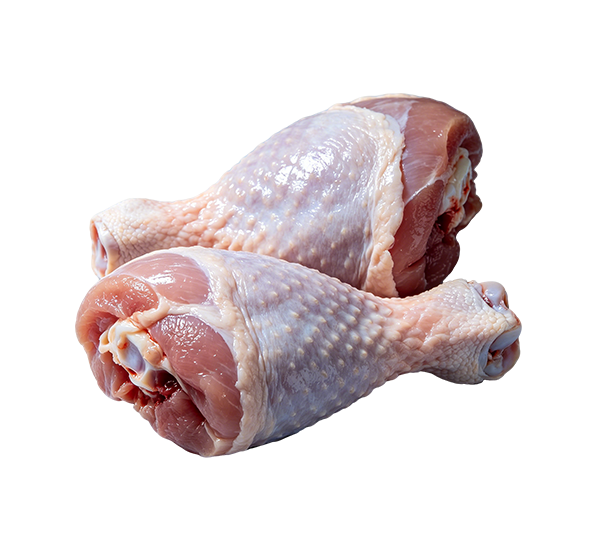
Loading and unloading control: Loading and unloading operations are fast and efficient, with a total time of no more than 15 minutes. Handle with care and prohibit violent handling to avoid packaging damage; Notify the recipient 30 minutes before unloading to prepare, ensuring that the destination cold storage temperature is ≤ -18 ℃, humidity is 85%~90%, and prepare insulation turnover boxes with insulation time ≥ 3 hours; After unloading, immediately transfer the chicken legs to a storage environment that meets the requirements. The transfer time to the cold storage should not exceed 10 minutes, and the exposure time at room temperature should not exceed 5 minutes. During the unloading process, randomly check 3-5 boxes for packaging and juice loss. If any problems are found, immediately stop unloading and evaluate the loss.
Emergency management and control: Develop comprehensive emergency response plans and conduct regular drills; If the refrigeration equipment fails, the backup equipment should be started or the goods should be transferred within 15 minutes. The backup equipment should be able to maintain the temperature of the carriage for at least 4 hours; If there is an abnormal temperature, increase the monitoring frequency to every 10 minutes, isolate and evaluate the chicken legs with abnormal temperature, and decide whether to continue transportation or destruction based on the evaluation results to avoid contaminating other goods.